
Short summary
Four years after Russia’s full-scale invasion of Ukraine, three out of four adult Ukrainians living in Denmark wish to stay even if their hometown becomes safe again. At the same time, nearly half report that fear of being sent back constitutes a fairly big or serious problem in their daily lives.
Key Findings
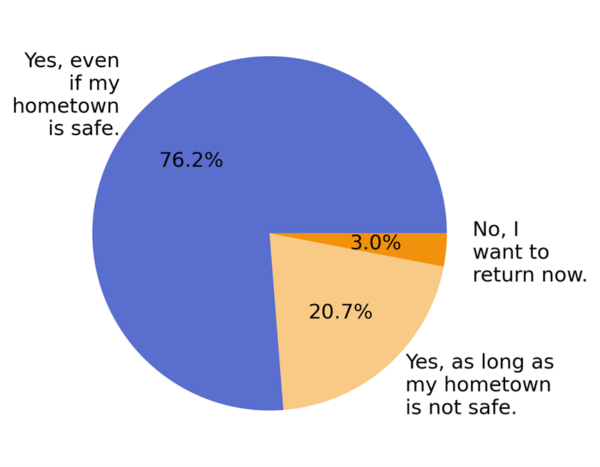
- 76 per cent of adult Ukrainians wish to stay in Denmark even if their hometown becomes safe.
- 24 per cent wish to return either immediately or once their hometown is safe.
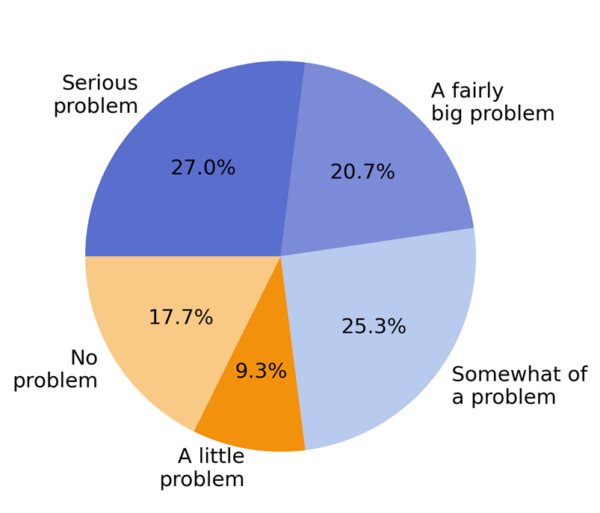
- 48 per cent report that fear of being sent back is a fairly big or serious problem.
- Only 8 per cent still have a partner and/or children in Ukraine.
- Older Ukrainians are more likely to wish to return than younger Ukrainians.
- The share wishing to stay has increased steadily since spring 2023.
Relevance Today
On 24 February 2026, the war between Russia and Ukraine has been going on for four years. The parties met for negotiations on a possible peace agreement, but it remains uncertain whether and when an agreement will be reached and, if so, what form it will take. EU’s Temporary Protection Directive, which provides temporary protection to people fleeing Ukraine, has so far been extended until March 2027. The increasing share wishing to remain suggests that what began as temporary displacement is increasingly becoming long-term settlement. Policy discussions about integration as well as return migration must take into account that a large majority wish to stay.
Research summary
The analysis is based on the fourth wave of the Danish Refugee Cohort (DARECO), collected between October 2025 and January 2026. The survey was sent to all Ukrainians aged 18 and above who arrived in Denmark between February 2022 and July 2024 and were still residing in Denmark at the time of data collection. The main analysis includes 7,000 respondents who completed the full questionnaire.
We asked Respondents whether they wished to stay in Denmark even if their hometown becomes safe again. Seventy-six per cent answered that they wish to stay even after the war no longer poses a threat to their hometown. This represents an increase from 69 per cent one year earlier (Foged et a., 2025), and 50 per cent in early spring 2023 (Karstoft et al., 2023).
Figure 1. Wish to stay and fear of being sent home
(a) Wish to stay in Denmark
(b) Fear of being sent home
Note: Own calculations based on the Danish Refugee Cohort (DARECO). Data collection between October 2025 and January 2026.
A separate question asked how much of a problem fear of being sent back constitutes in daily life. Forty-eight per cent responded that this fear is a fairly big or serious problem. Family ties are associated with return intentions. Ukrainians without a partner or children in Ukraine are more likely to wish to remain in Denmark (77 per cent) compared to those with close family in Ukraine (62 per cent). Only 8 percent report to (still) have a partner and/or children in Ukraine. Among those aged 60 and above, 48 per cent wish to return either immediately or once their hometown becomes safe. Younger Ukrainians are considerably more likely to intend to stay.
Figure 2. Age distribution and return intentions by age groups
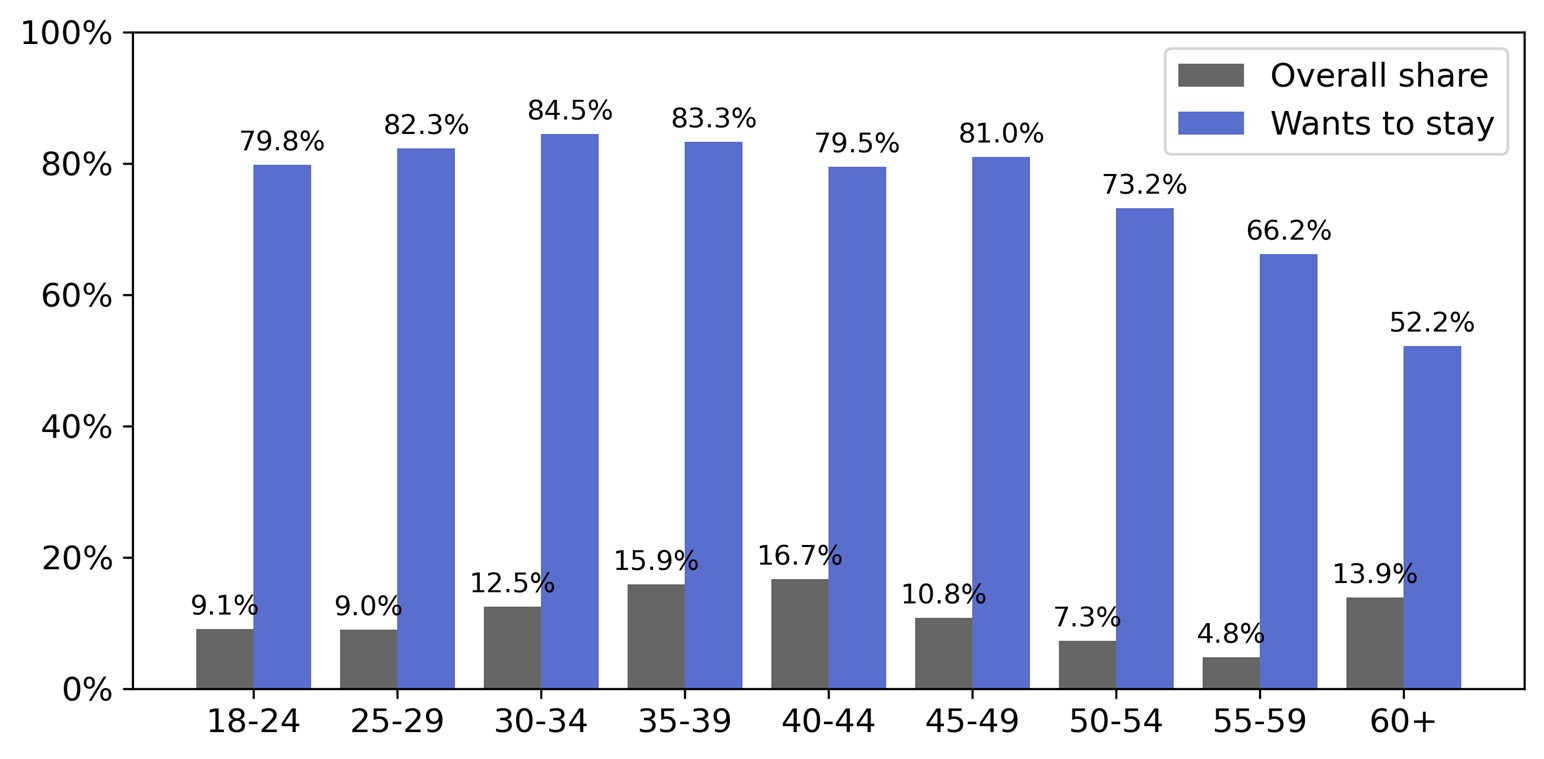
Note: Own calculations based on the Danish Refugee Cohort (DARECO). Data collection between October 2025 and January 2026.
The results are based on more than 7,000 respondents, meaning the margin of error is small (about ±1 percentage point). Participation is relatively high for a displaced population: 34% responded to the survey and 32% completed it in full.
Non-response could affect the exact percentages to some extent, however, very different patterns among non-respondents would be required to overturn the conclusion that a majority wishes to stay.
Conclusion
Four years after the invasion, most adult Ukrainians in Denmark now see their future in the country. The share wishing to stay has increased steadily, and nearly half report fear of being sent back as a burden in everyday life. However, uncertainty about when and how the war will end and the temporary protection status of Ukrainians make long-term planning difficult, which likely affects integration outcomes (Adda et al, 2022).
References
Adda, Dustmann and Görlach. 2022. “The Dynamics of Return Migration, Human Capital Accumulation, and Wage Assimilation.” The Review of Economic Studies, Volume 89, Issue 6, November 2022, Pages 2841–2871
Karstoft, et al. 2023. “Displaced Ukrainians in Denmark: Initial results from DARECO. University of Copenhagen.”
Foged, Karstoft and Zink. 2025. ”The majority of Ukrainians wish to stay in Denmark.” ROCKWOOL Foundation Analysis.
Disclaimer
The opinions and views expressed in this publication are those of the author(s) and do not necessarily reflect those of the ROCKWOOL Foundation Berlin (RFBerlin). While research disseminated through this series may address policy-relevant topics, RFBerlin, as an independent research institute, does not take institutional policy positions.
Publications in the RFBerlin Research Insights series may represent preliminary or ongoing work that has not been peer-reviewed. Readers are advised to consider the provisional nature of such research when citing or applying its findings.
These publications aim to make scientific work accessible to a broader audience and to encourage informed, research-based discussion. All materials are provided by the respective authors, who bear responsibility for appropriate attribution and rights clearance. While every effort has been made to ensure accuracy and proper acknowledgment, RFBerlin welcomes notifications of any concerns regarding authorship, citation, or intellectual property rights. Please contact RFBerlin to request corrections if needed.
Use of these materials for the development or training of artificial intelligence systems is strictly prohibited.
