











We conduct independent research into significant challenges to the economy, society and the welfare state in a global world.
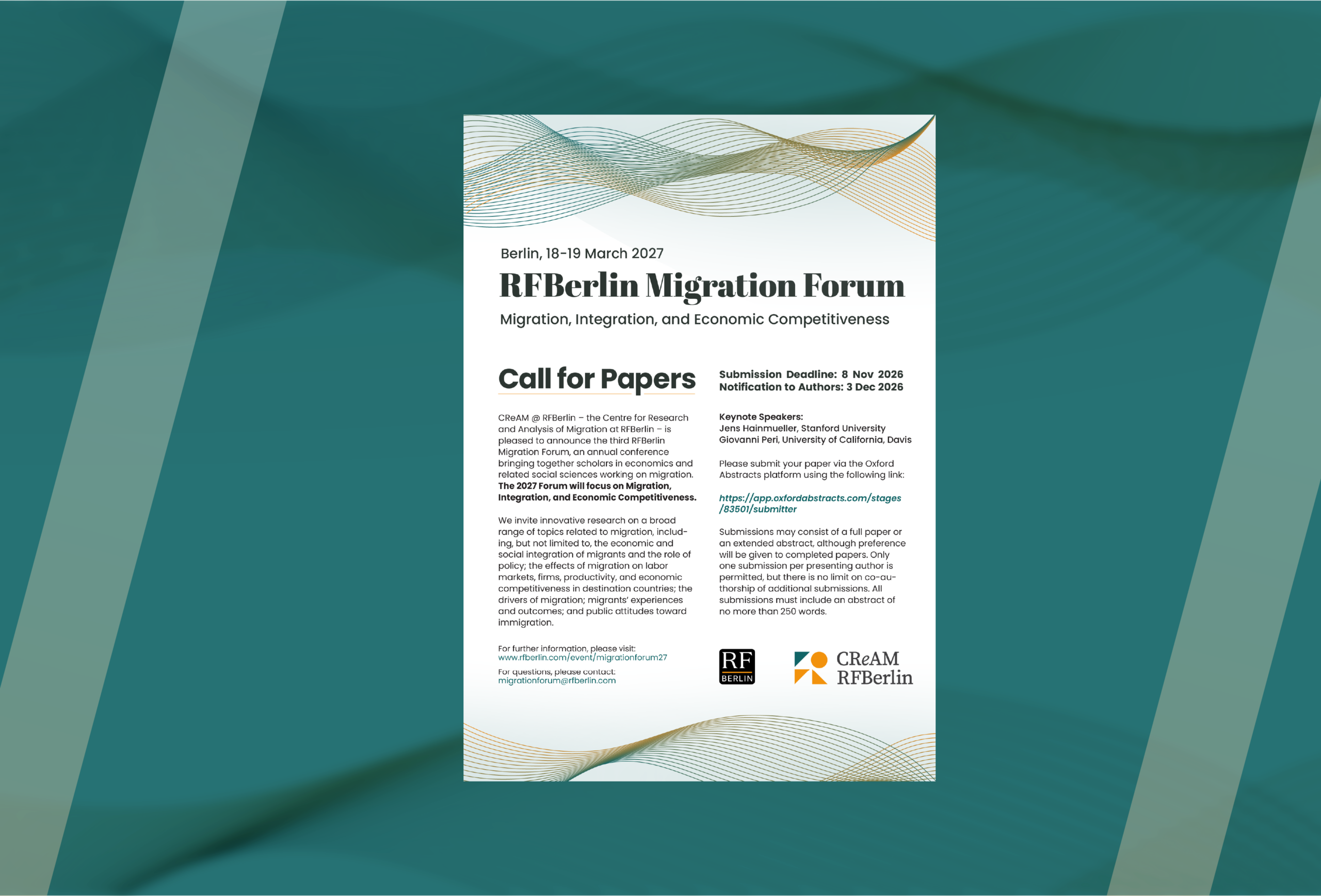
Call for Papers: RFBerlin Migration Forum 2027
CReAM@RFBerlin invites submissions for the third RFBerlin Migration Forum, on migration, integration, and economic competitiveness, with keynotes by Jens Hainmueller (Stanford) and Giovanni Peri (UC Davis).
Submission deadline: 8 November 2026.

Become part of our research team
Research
The ROCKWOOL Foundation Berlin Institute for the Economy and the Future of Work (RFBerlin) engages in research designed to raise the standard of public debate and create the best possible basis for policy making.
Discussion papers
No. 293/26 - November 2026
How is AI Affecting College Major and Course Choices? Evidence from Finland
Ciprian Domnisoru, Tuomas P. Heikkinen
No. 292/26 - November 2026
Literacy and Occupation among Free People in the Antebellum United States
Barry Chiswick, RaeAnn H. Robinson
No. 291/26 - November 2026
Estimating, Bounding, and Decomposing the Effects of a Parent-Directed School Readiness Program
Flávio Cunha, Qinyou Hu, Andrea Salvati, Kenneth I. Wolpin, Rui Zeng
No. 290/26 - October 2026
Early Decisions, Long-Lasting Consequences: The Macroeconomics of School Tracking
Lukas Mahler, Suzanne Bellue
Research Insights
Concise, research-based articles for scholars,
policymakers, and anyone curious about the world.

No. 42/26 - October 2026
Collective Bargaining Between Protection and Flexibility: Lessons from Germany and Italy
How much flexibility should firms have to depart from collectively negotiated wages and working conditions? The experiences of Germany and Italy show both the benefits and the risks of decentralizing collective bargaining.
Learn more
No. 41/26 - October 2026
When a Younger Sibling Has a Disability, Older Children Pay a Mental Health Price
About one in fourteen Danish families has a child with a physical disability, such as a heart defect, epilepsy or cerebral palsy. Caring for that child takes time, money and emotional energy. What happens to the brothers and sisters who grow up alongside them?
Learn more
No. 40/26 - October 2026
How Municipal Budgets Respond to Revenue Gains and Losses
How do local governments use additional funds, and how do they adjust to revenue cuts? These questions are central to the design of fiscal equalization schemes and of large public investment programs that channel funds to municipalities. They are difficult to answer, however, because transfers typically respond to local conditions.
Learn moreCReAM Reports
Data-driven reports on migration and related economic and social trends, highlighting the latest developments across Europe and beyond.

No. 6/26 - July 2026
Employment of Immigrants in the European Union: Progress, Persistent Gaps, and Untapped Potential
Employment among immigrants in the European Union has reached its highest level since 2017, yet important differences remain across origin groups, countries and demographic characteristics. While EU immigrants frequently match or exceed native employment rates across Member States, substantial employment disadvantages remain concentrated among non-EU immigrant women and highly educated non-EU immigrants, pointing to significant untapped labour market potential.
View report
No. 5/26 - June 2026
The Refugee Population in Europe in 2025: A Decade of Growth Comes to a Halt
The rapid growth of Europe's refugee population has come to an end. Drawing on new UNHCR data, this report shows how falling asylum inflows, the naturalisation of earlier refugee cohorts in Germany, and a reform of temporary protection in Italy are reshaping refugee numbers.
View report
No. 4/26 - May 2026
Immigrant Educational Attainment in the European Union: Origin, Gender and Cross-Country Differences
This report examines educational attainment among natives, EU-born immigrants, and non-EU-born immigrants across the European Union, highlighting how differences by origin, gender, and country continue to shape educational outcomes despite a general rise in tertiary attainment since 2017.
View reportNews
RFBerlin research and researchers are regularly featured in the press.

2 Nov 2026
Featured in Worldwide Media: Research Insight on Collective Bargaining Goes Global
View article

29 Oct 2026
Flexibility in collective agreements can improve competitiveness
View article
18 Oct 2026
When a younger sibling has a disability, it places a strain on older children
View articleTweets by @RF_Berlin
Upcoming events
RFBerlin hosts a wide array of events aimed at fostering academic research and collaboration.
Brown Bag Seminar
4 November 2026
Tomáš Jagelka (University of Bonn)
Separating Preferences, Skills, and other Latent Personal Attributes from Endogenous Effort and Cognitive Noise
Masterclass
5 Nov – 6 Nov 2026
Racial Inequality in the Labor Market
Taught by Kerwin Charles and Ellora Derenoncourt
Applied Economics Seminar
6 November 2026
Ellora Derenoncourt (Princeton University)
Minimum Wages and Informality
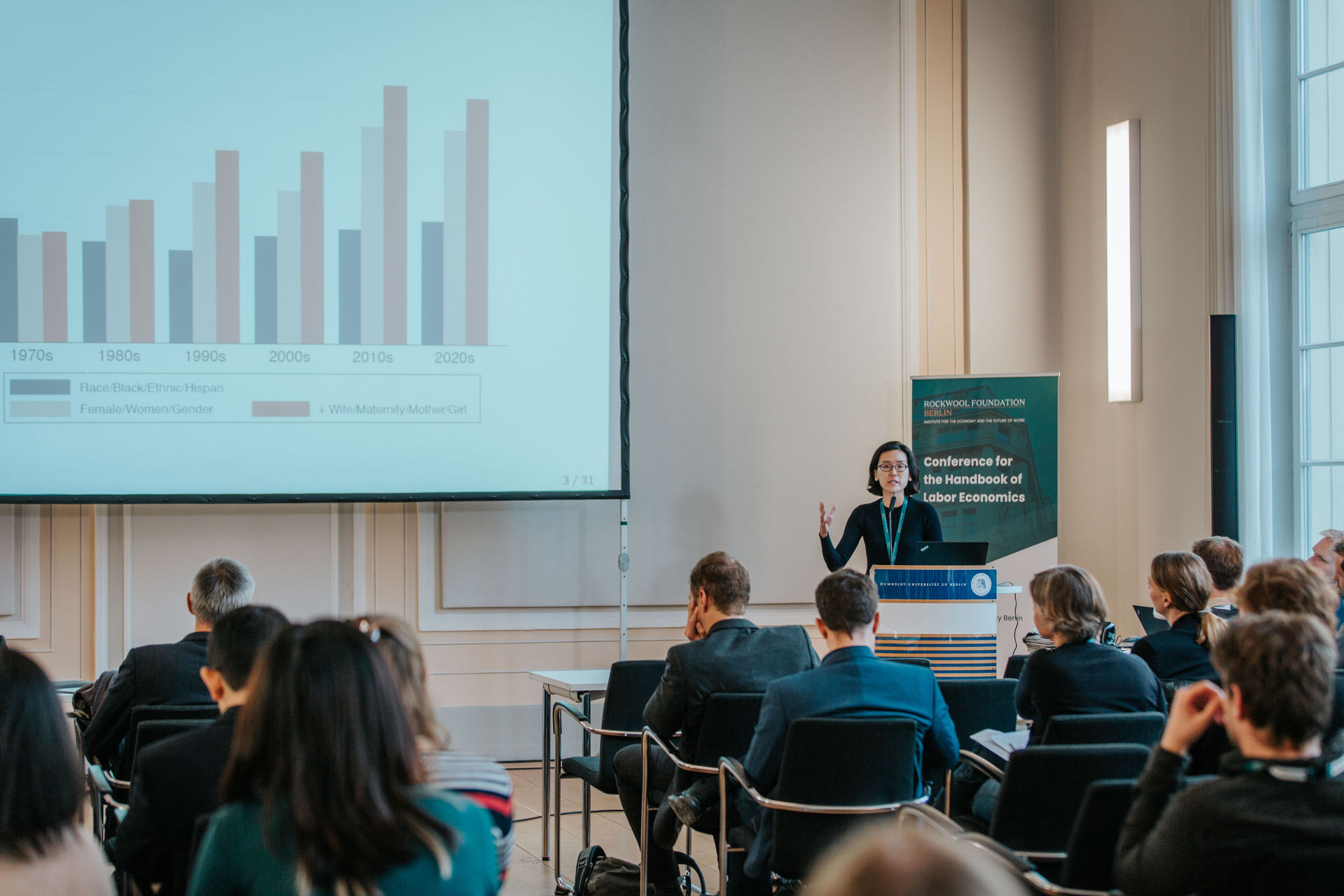
Handbook of Labor Economics – Chapter Previews
In anticipation of the upcoming Handbook of Labor Economics, we offer early access to select chapters through our Discussion Papers series. Following our 2023 conference on this new edition, first chapters are now available for preview, featuring insights from leading research in economics and labor.

Sign up to our newsletter
Keep up to date with upcoming RFBerlin events, our new research and other news from our research centre.