










We conduct independent research into significant challenges to the economy, society and the welfare state in a global world.
Become part of our research team
Research
The ROCKWOOL Foundation Berlin Institute for the Economy and the Future of Work (RFBerlin) engages in research designed to raise the standard of public debate and create the best possible basis for policy making.
Discussion papers
No. 122/26 - April 2026
Automation and the Changing Composition of Skill Demand
Mark Hellsten, Giuseppe Pulito, Sarah Schroeder
No. 121/26 - April 2026
No. 120/26 - April 2026
No. 119/26 - April 2026
Research Insights
Concise, research-based articles for scholars,
policymakers, and anyone curious about the world.

No. 10/26 - April 2026
Unlucky Migrants: Migrating During a Recession Can Lower Immigrants’ Earnings for More Than a Decade
Does the state of the economy matter when immigrants arrive in a host country? Our study shows that it does – and the effects can last for years.
Learn more
No. 9/26 - March 2026
Will AI Make Workers Better Off?
Will generative AI mainly replace workers, or will it increase living standards? This study responds “yes” to both.
Learn more
No. 8/26 - March 2026
Working Longer and Staying Healthy? Insights from Increasing Danish Retirement Ages
Many countries are currently increasing retirement ages due to aging populations. A key concern remains: will this have negative health consequences?
Learn moreCReAM Reports
Data-driven reports on migration and related economic and social trends, highlighting the latest developments across Europe and beyond.

No. 4/25 - October 2025
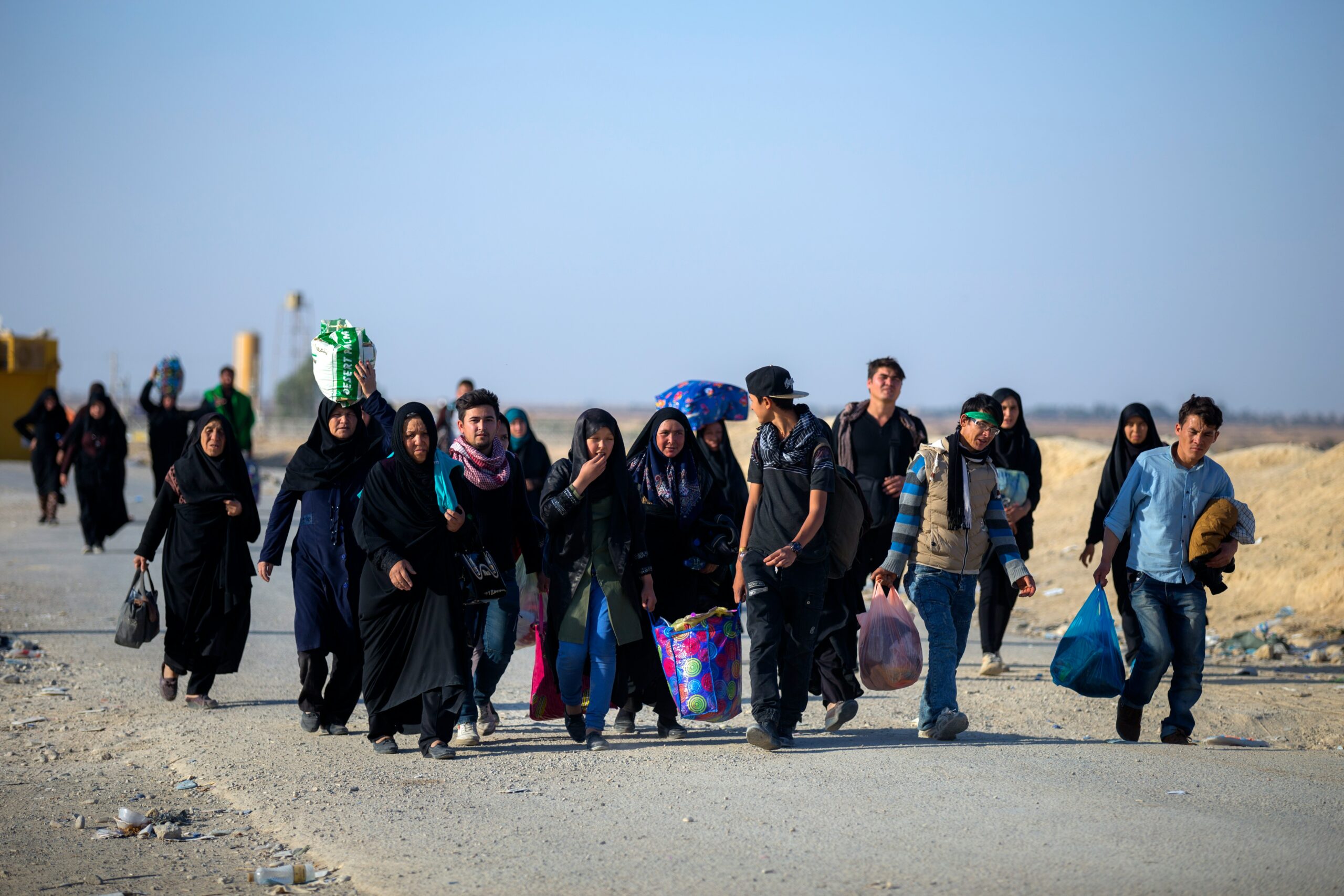
From Syria to Ukraine: Refugee Inflows and Trends in the European Union
The EU refugee population rose from about 1 million in 2014 to 7.8 million in 2024, driven by Syria and then the larger post-2022 Ukraine inflow. Germany remains the main host, but growth has been faster and uneven across countries, increasing pressure on asylum systems.
View report
No. 3/25 - July 2025
Employment of Migrants in the European Union
Employment in the EU has risen for all groups. EU migrants have the highest rates, non-EU migrants have improved but still lag, mainly due to lower employment among non-EU women, while men’s rates are similar across groups.
View report
No. 2/25 - June 2025
Education of Migrants in the European Union
Tertiary education among EU migrants has risen steadily, with EU migrants nearing native levels and non-EU migrants closing the gap. Differences remain across countries and groups, with women generally more educated than men.
View reportNews
RFBerlin research and researchers are regularly featured in the press.

30 Mar 2026
German Media Mentions RFBerlin Insight on How Germany Could Raise Its Low Birth Rate
View article
26 Mar 2026 • Handelsblatt
Christian Dustmann Highlights Implementation Challenges in Germany’s Reform Debate
View article

16 Mar 2026 • F.A.Z.
Christian Dustmann on the Role of Diaspora Networks in Shaping Migration Patterns
View articleTweets by @RF_Berlin
🧠New RFBerlin Research Insight!
Who manages your team shapes more than performance, it shapes culture. New research by @VirginiaMinni, Kieu-Trang Nguyen, Heather Sarsons and @CarlaSrebot shows gender-progressive foreign managers narrow the gender pay gap by ~20%, and those
El número de inmigrantes que viven en la UE bate récord en 2025, con 64 millones frente a l40 millones en 2010, según estudio de @RF_Berlin Alemania sigue siendo el principal destino pero España el que más rápido crece, casi igualando ya a Francia.
🧠New RFBerlin Research Insight!
Foreign wars sometimes boost leaders’ popularity at home.
A study by Mikael Elinder, Oscar Erixson & @ollehammar examines Russian public opinion before and after the invasion, revealing a powerful rally effect that reshaped attitudes far beyond
Upcoming events
RFBerlin hosts a wide array of events aimed at fostering academic research and collaboration.
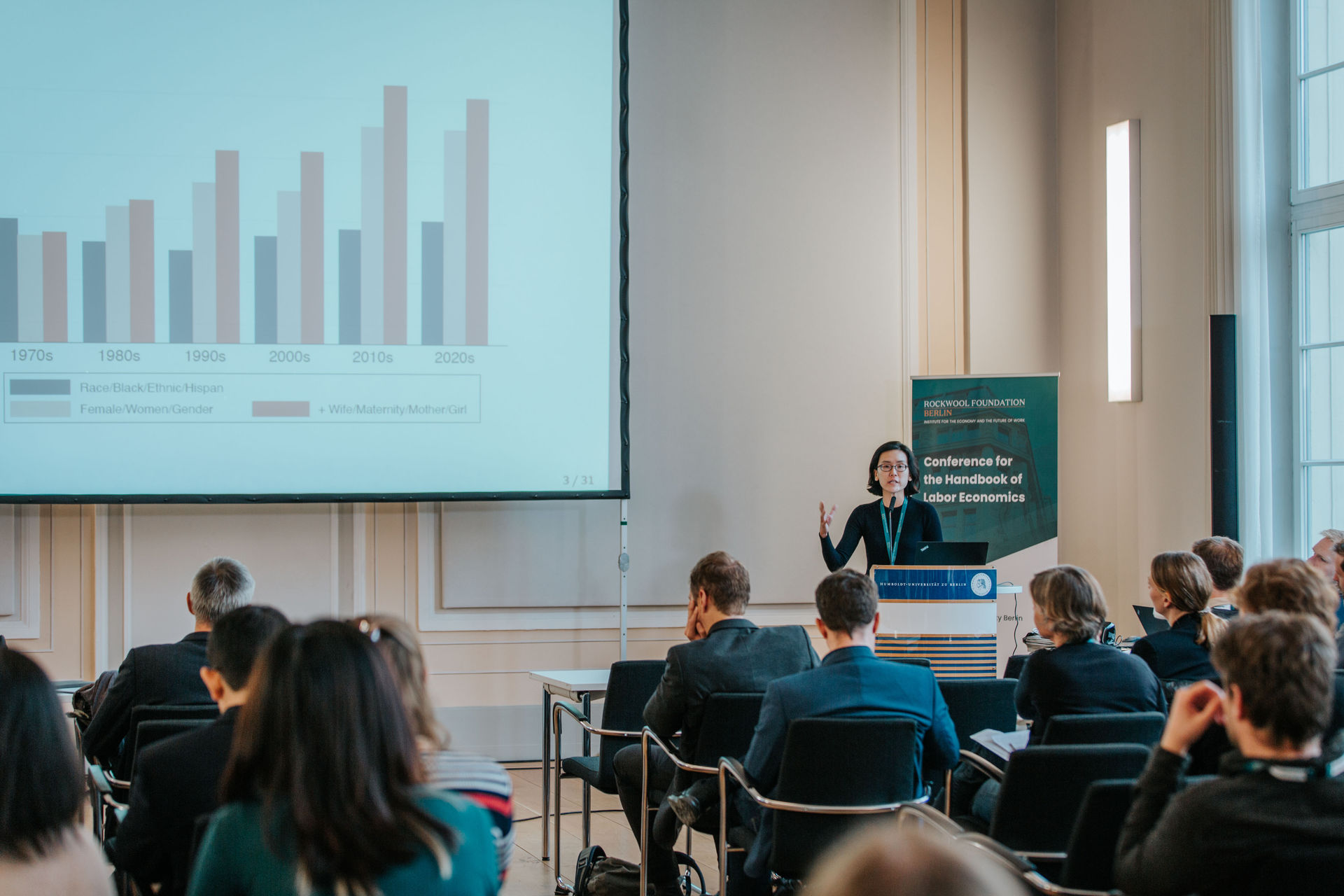
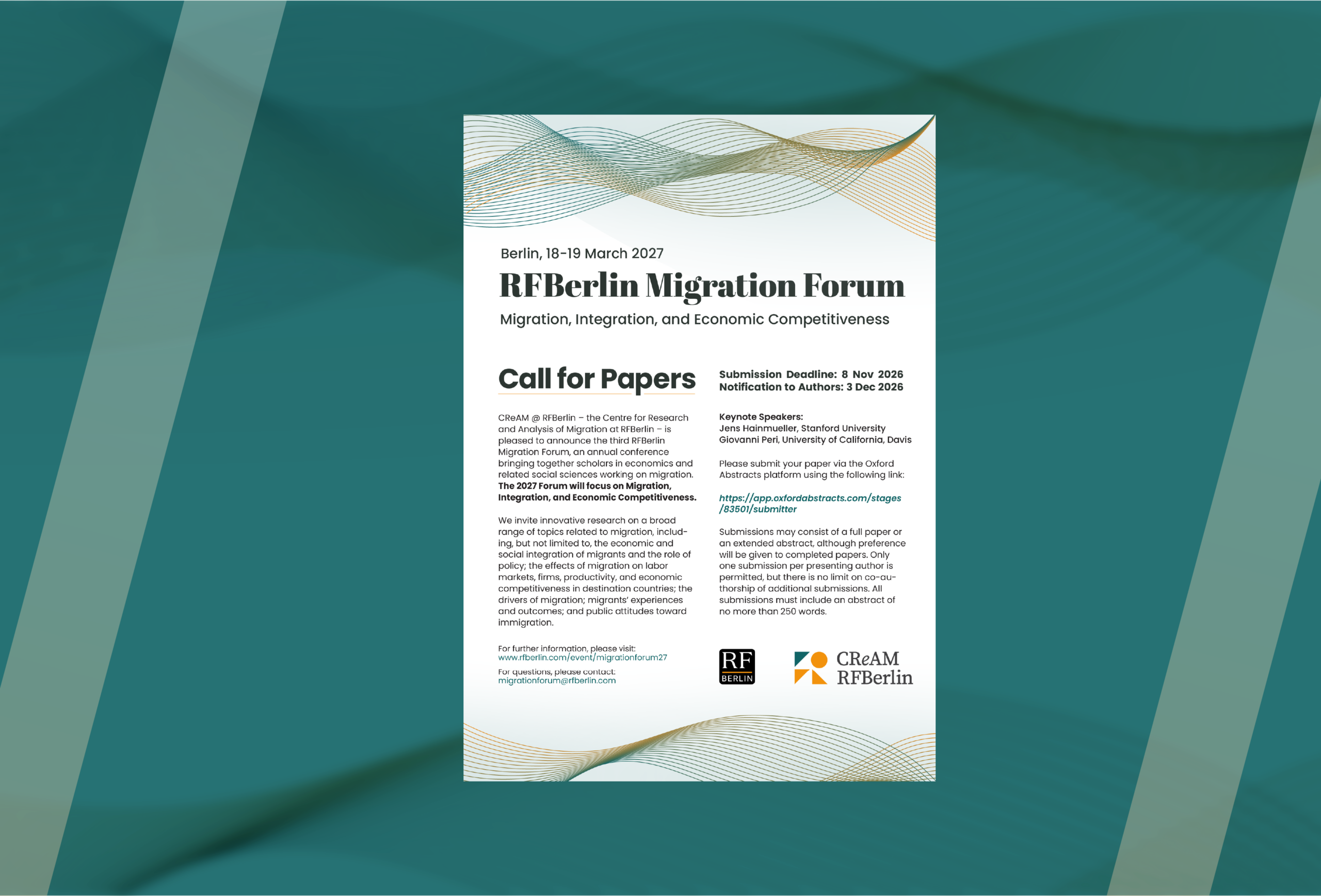
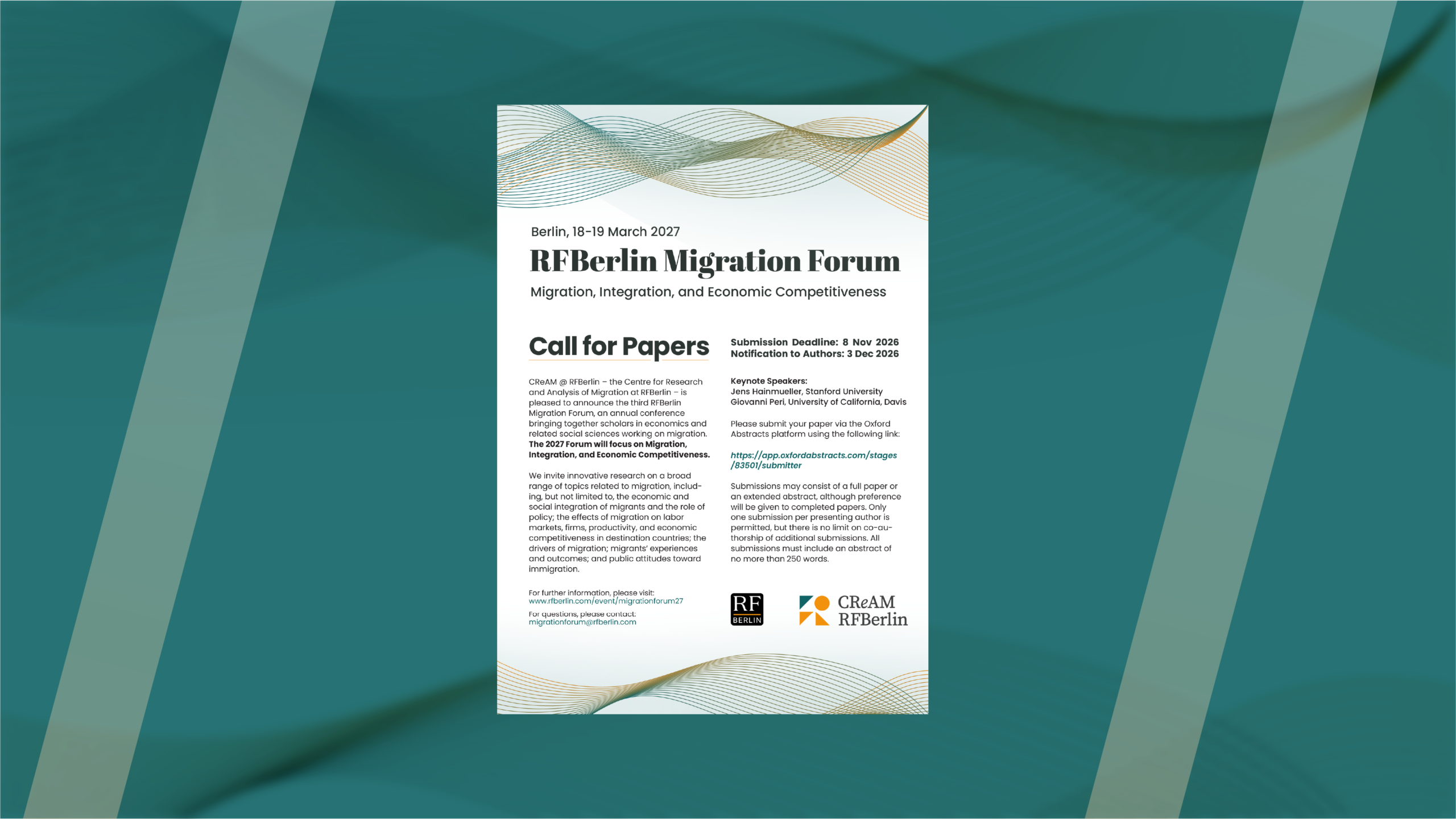
Handbook of Labor Economics – Chapter Previews
In anticipation of the upcoming Handbook of Labor Economics, we offer early access to select chapters through our Discussion Papers series. Following our 2023 conference on this new edition, first chapters are now available for preview, featuring insights from leading research in economics and labor.

Sign up to our newsletter
Keep up to date with upcoming RFBerlin events, our new research and other news from our research centre.