












We conduct independent research into significant challenges to the economy, society and the welfare state in a global world.
Become part of our research team
Research
The ROCKWOOL Foundation Berlin Institute for the Economy and the Future of Work (RFBerlin) engages in research designed to raise the standard of public debate and create the best possible basis for policy making.
Discussion papers
No. 193/26 - July 2026
On the Extent, Correlates, and Consequences of Reporting Bias in Survey Wages
Marco Caliendo, Katrin Huber, Ingo Isphording, Jakob Wegmann
No. 192/26 - July 2026
Taxing Labor: Firm R&D, Automation and the Labor Share
Hyejin Ku, Uta SchΓΆnberg, Ragnhild C. Schreiner
No. 191/26 - July 2026
The Labor Market Impacts of GLP-1s
Meltem Daysal, Camille Fredrickson, Ida Lykke Kristiansen, Mircea Trandafir, Jonathan Zhang
No. 190/26 - July 2026
Racial Screening on the Big Screen? Evidence from the Motion Picture Industry
Liang Zhong, Angela Crema, M. Daniele Paserman
Research Insights
Concise, research-based articles for scholars,
policymakers, and anyone curious about the world.

No. 21/26 - June 2026
Did Extractive TaxationΒ Trigger the French Revolution?Β
This study explores how heavier taxation under the Ancien RΓ©gime contributed to unrest and anti-tax grievances before 1789. The findings suggest that unequal and extractive taxation undermined the monarchyβs legitimacy and helped fuel support for revolutionary change.
Learn more
No. 20/26 - June 2026
Friends at Work: Do Social Connections Make Teams Perform Better?
Imagine a workplace where teams occasionally meet outside workβsharing a meal, playing games, or simply spending time together. It may sound like a small perk, but could it actually be profitable for employers to support such activities?
Learn more
No. 19/26 - May 2026
Highly Controlling Parenting Linked to Worse Life Chances of Children
How much do parents shape their childrenβs future? This research looks at how different parenting styles are related to childrenβs outcomes from school all the way into the labor market.
Learn moreCReAM Reports
Data-driven reports on migration and related economic and social trends, highlighting the latest developments across Europe and beyond.

No. 4/25 - October 2025
From Syria to Ukraine: Refugee Inflows and Trends in the European Union
The EU refugee population rose from about 1 million in 2014 to 7.8 million in 2024, driven by Syria and then the larger post-2022 Ukraine inflow. Germany remains the main host, but growth has been faster and uneven across countries, increasing pressure on asylum systems.
View report
No. 3/25 - July 2025
Employment of Migrants in the European Union
Employment in the EU has risen for all groups. EU migrants have the highest rates, non-EU migrants have improved but still lag, mainly due to lower employment among non-EU women, while menβs rates are similar across groups.
View report
No. 2/25 - June 2025
Education of Migrants in the European Union
Tertiary education among EU migrants has risen steadily, with EU migrants nearing native levels and non-EU migrants closing the gap. Differences remain across countries and groups, with women generally more educated than men.
View reportNews
RFBerlin research and researchers are regularly featured in the press.


10 Jul 2026
Collective Agreements Are Least Common Where Workers Need Them Most
View article

1 Jul 2026
Job Prospects Decline Sharply The Longer a Person Remains Unemployed
View articleTweets by @RF_Berlin
π This Friday marks the 100th RFBerlin Brown Bag Seminar!
This time, we’re delighted to welcome David Berger (@DukeEcon) for a talk on π ππ’π―πͺπ΄π© ππͺπΉ π°π§ π.π. ππ°π³π΅π¨π’π¨π¦ ππ°π€π¬-πͺπ―?
100 seminars, countless ideas, and many lively lunchtime discussions;
π° Our latest CReAM@RFBerlin report on immigrant employment in the EU has been featured by international media including @Reuters, @tagesschau, @FR, @Internazionale, @EconomicTimes and more.
Read the report by Christian Dustmann, Tommaso Frattini & Camilla Piovesan:
β‘οΈ
Employment is at its highest level since 2017, but Europe is still leaving talent untapped.
Better recognition of foreign qualifications, improved job matching, and stronger support for non-EU immigrant women could help unlock underused talent and ease labour shortages across
Upcoming events
RFBerlin hosts a wide array of events aimed at fostering academic research and collaboration.
RFBerlin Public Lecture
20 October 2026
Investing in Child Mental Health: Implications for Human Capital Development
RFBerlin Annual Public Lecture by Janet Currie
RFBerlin Applied Economics Seminar
27 October 2026
Michael Keane (Johns Hopkins University)
RFBerlin Masterclass
5 Nov β 6 Nov 2026
βRacial Inequality in the Labor Marketβ by Kerwin Charles and Ellora Derenoncourt
Handbook of Labor Economics β Chapter Previews
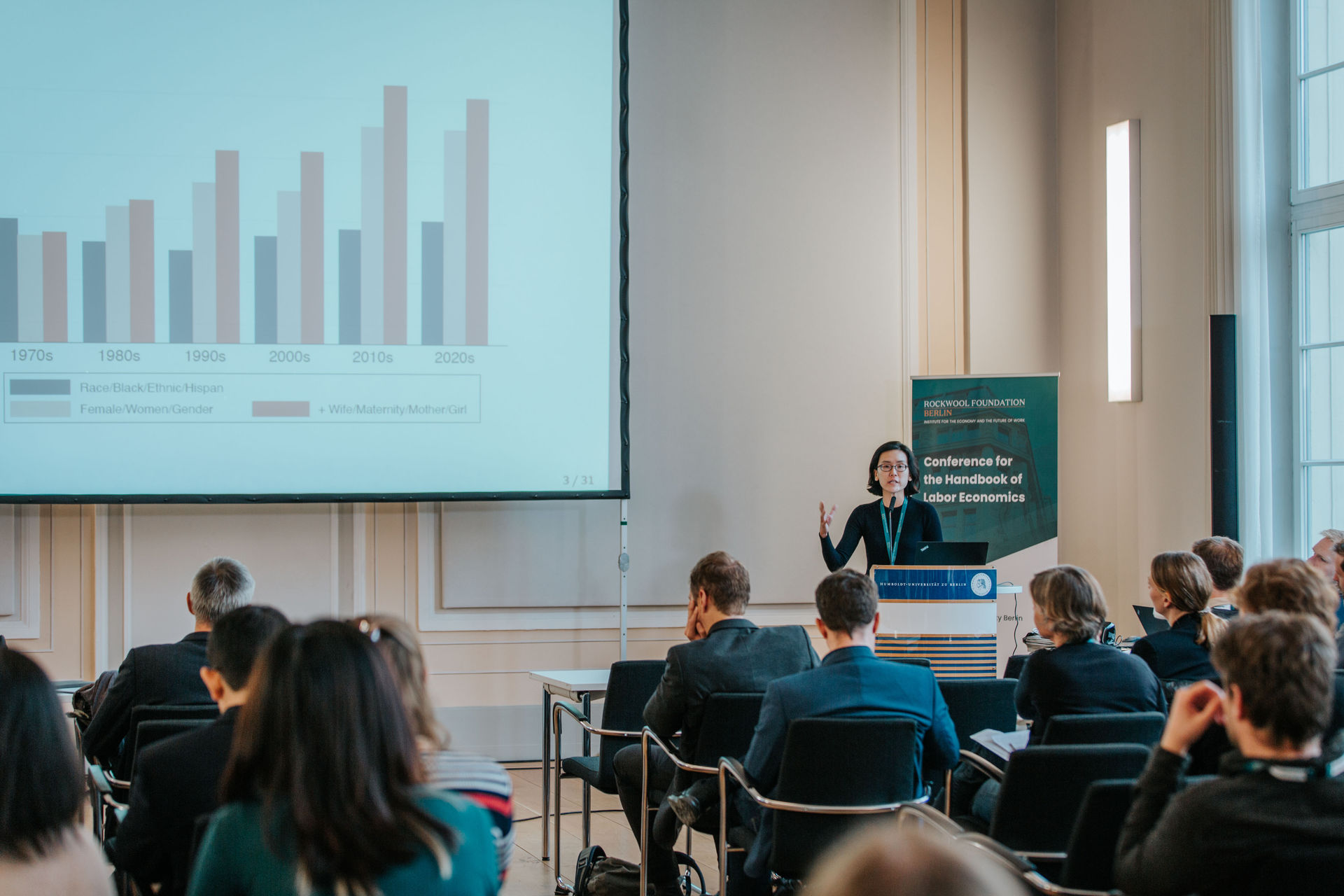
In anticipation of the upcoming Handbook of Labor Economics, we offer early access to select chapters through our Discussion Papers series. Following our 2023 conference on this new edition, first chapters are now available for preview, featuring insights from leading research in economics and labor.

Sign up to our newsletter
Keep up to date with upcoming RFBerlin events, our new research and other news from our research centre.