
Projects
Migration and migration policies
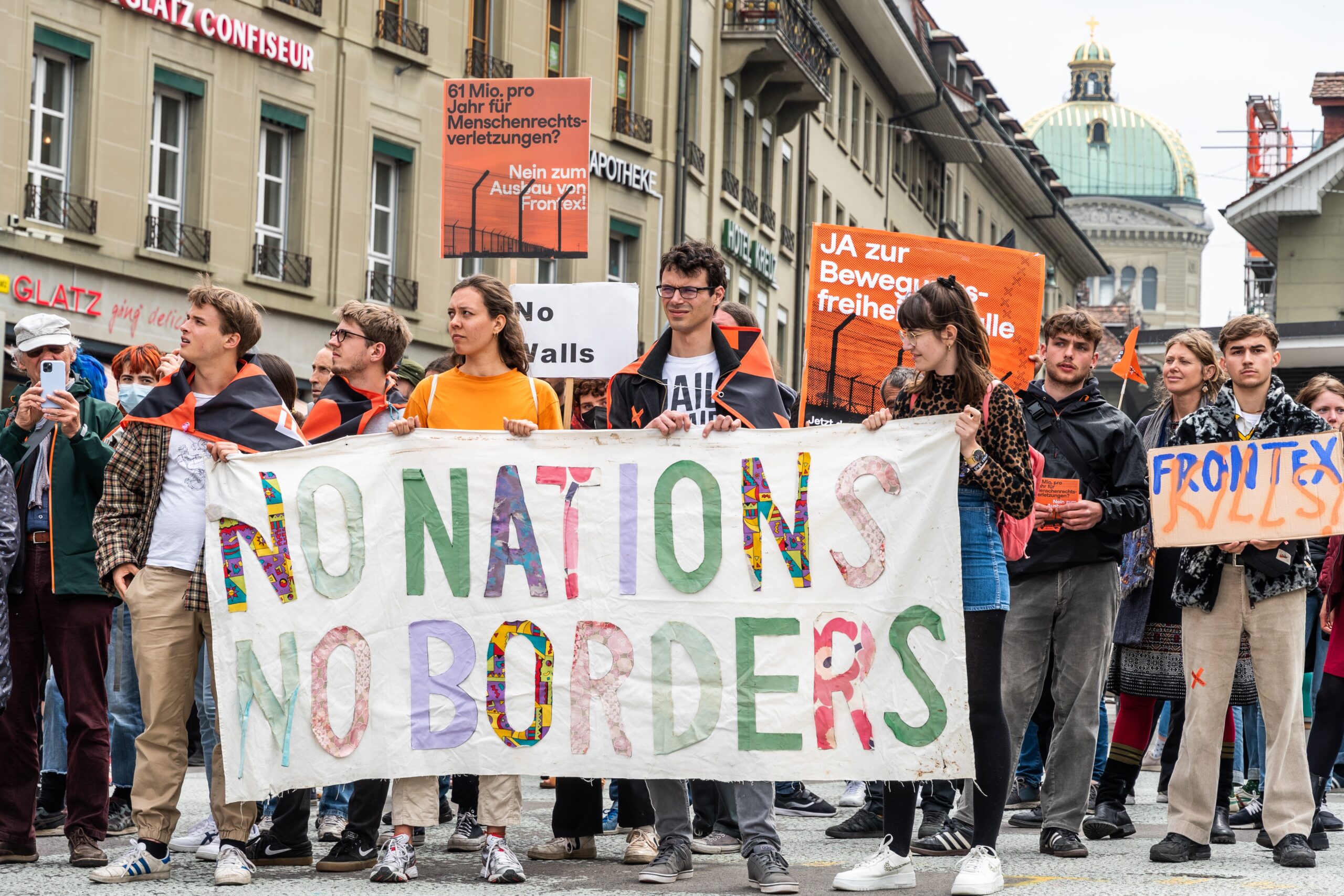
According to data from the European Border and Coast Guard Agency (Frontex), 330,000 irregular border crossings were registered in 2022 – an increase of 64% from the previous year and the highest number recorded since 2016. This project aims to understand the forces that pull and push migrants toward Europe and how EU migration policies affect this process. It will explore the migration process toward Europe and how migration barriers and economic opportunities in destination and transit countries and the migration policies of European countries influence it.
We will first look at the migration process, from the country of origin to a destination country, focusing on the flows from African countries to Europe. To this end, we will estimate a structural dynamic model of location choice, which endogenizes the migration routes chosen by immigrants. The estimated model will help analyze the impact of counterfactual policies intended to manage migrants’ flows either at the EU border or in Africa. We will then focus on the final stage of these migration movements and evaluate the effectiveness of EU border policies on attempted entries by unauthorized immigrants, estimating the causal effect of EU policies on irregular inflows. The analysis will quantify deterrence and diversion effects at the external EU borders, informing the policy debate on the management of migrations from the EU’s Southern and Eastern borders.
The results of this project will contribute to the literature on migration decisions and migration flows and how these are shaped by the situation and policy decisions in transit and destination countries. They will also provide input for the design of welfare-enhancing migration and border policies in Europe.
Project Participants:
Jerome Adda (Bocconi University)
Giacomo Battiston (ROCKWOOL Foundation Berlin)
Francesco Fasani (University of Milan)

Knowledge Spillover and Individual Careers
Workers obtain skills not only through formal education and training, but also through learning by doing at the workplace. Such skill acquisition at the workplace may partly operate through learning from coworkers. However, evidence on knowledge spillover among co-workers is still inconclusive, and most existing evidence has focused on high-skilled workers. This project will produce the first study to provide direct micro-level evidence on knowledge spillover from well-trained workers (apprenticeship graduates) onto their lower skilled coworkers. The main part of the project focuses on knowledge spillover onto unskilled labour market entrants without formal qualifications, a group that is vulnerable to job loss and low labour market attachment. In an extension, the analysis will shift to other groups of workers whose skills are low or require updating, most notably immigrant workers (whose skills require adaptation to the host country labour market) or older workers (whose skills may have become obsolete due to technological change). Knowledge spillovers at the workplace have obvious important implications: in the presence of knowledge spillovers, the return to investment into training can be far larger than the sum of returns to trained workers.
Project Participants:
Christian Dustmann (University College London)
Uta Schönberg (University College London)

International Migration in the European Union: Evidence from Linked Register Data
The current policy discussion in many countries is concerned with skills shortage or the lack of workers in an expanding list of key occupations. A potential solution to the shortages could be increased mobility of workers with the required skills, a goal that also featured prominently in motivation for the common EU labor market.
This project studies the mobility of workers across two EU countries, Austria and Germany. It exploits novel linked register data from social security administrations in Germany and Austria, which enables us to construct longitudinal information on employment spells and earnings in both countries. Thereby the data allows us to observe complete career profiles of individual workers who migrate from Austria to Germany or vice versa.
The findings from this project will contribute to a better understanding of the motives for migration, the consequences of moving on workers’ career outcomes, the impacts of economic shocks and welfare policies on migration flows, and information transmission via migrant networks.
By providing evidence on migrant careers from two countries, the project makes novel contributions to the literature that was traditionally studying international migration from the perspective of a single country. The findings will also complement existing research on internal migration within one country by pointing out differences between national and international migration.
Project Participants:
David Card (University of California, Berkeley)
Rudolf Winter-Ebmer (Johannes Kepler University Linz)
Wolfgang Frimmel (Johannes Kepler University Linz)
Julia Schmieder (ROCKWOOL Foundation Berlin)
